2026 Top Glass Bottle for Liquor Manufacturers

Time:2026-10-03 Author:Isabella
0%

Choosing the right Glass Bottle For Liquor requires more than attractive photography or a heavy base. In 2026, manufacturers must balance shelf presence, filling performance, product protection, and responsible material use. A bottle may look impressive under store lighting, yet fail during transport or high-speed production. Small details matter.

The strongest designs begin with practical evidence. Experienced buyers examine glass clarity, wall thickness, neck accuracy, closure compatibility, and resistance to thermal shock. They also review mold precision, quality-control records, recycling practices, and delivery consistency. Scott DeFife, a recognized glass-packaging industry expert, has stated, “Glass is infinitely recyclable and can be recycled endlessly without loss in purity or quality.” That principle remains important, although recycling results depend on collection systems and local processing capacity.

This guide evaluates leading bottle styles for liquor manufacturers preparing for 2026. It considers classic rounds, square bottles, fluted forms, miniature formats, and custom silhouettes. Each option creates a different hand feel. A broad shoulder can suggest confidence. A narrow neck can improve pouring control. A thick base can add stability, but it may increase material use and shipping weight.

No bottle is perfect. Some premium shapes require slower production. Some lightweight designs need stronger handling controls. Manufacturers should test samples with real closures, labels, cartons, and filling equipment before making a final decision. That step is easy to overlook. It can prevent costly adjustments later.

The goal is not simply to select a beautiful container. It is to identify a reliable Glass Bottle For Liquor that supports brand identity, operational efficiency, product safety, and long-term market credibility.
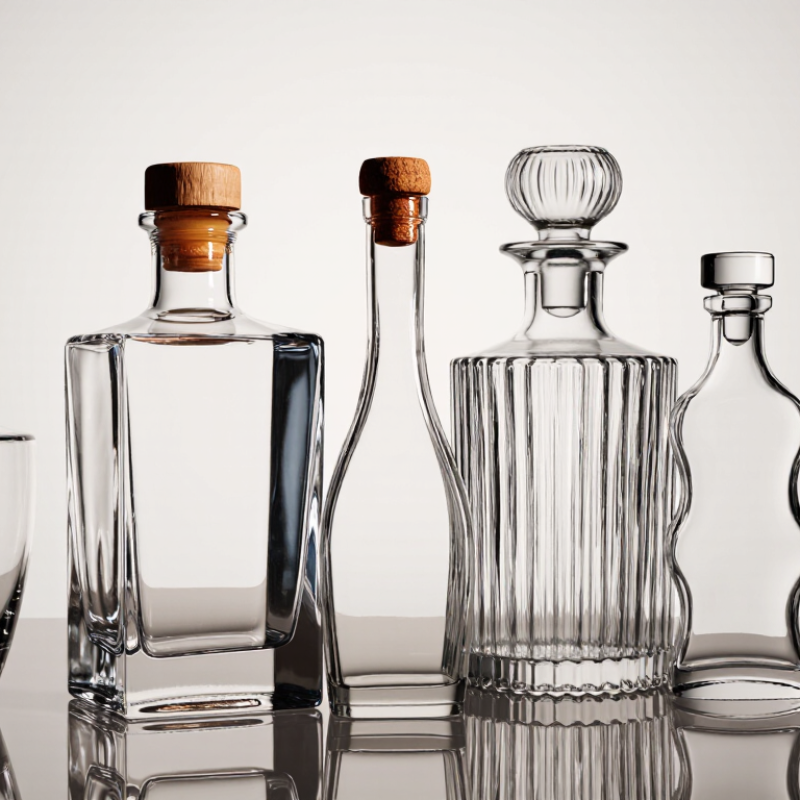
2026 Top Glass Bottle for Liquor Manufacturers

Glass Bottle Types Used for Liquor Packaging in 2026

2026 Top Glass Bottle for Liquor Manufacturers

Glass bottle types are becoming more specialized for liquor packaging in 2026. Clear flint glass remains popular for spirits with attractive natural colors. It provides strong shelf visibility and supports premium embossing. However, clear glass offers limited protection from ultraviolet light. This matters for light-sensitive liquids.

Amber glass provides better UV shielding and suits products requiring additional protection. Green glass remains useful for traditional visual positioning and distinctive shelf presentation. Lightweight glass is also gaining attention. It reduces transport weight while maintaining suitable strength. Yet, lighter designs can feel less substantial in the hand. That trade-off deserves careful testing.

Manufacturers are also selecting bottles by shape and neck finish. Straight-sided bottles simplify labeling and packing. Rounded shoulders create a softer, handcrafted impression. Custom molds can improve identity, but they may increase tooling costs and production complexity. The closure must match the bottle finish precisely. Poor alignment can cause leakage, oxygen exposure, or filling problems. Recycled glass content is another important consideration. Its color and consistency may vary slightly between production batches. Quality teams should check wall thickness, base stability, impact resistance, and dimensional tolerance. Laboratory testing remains essential, even when a prototype looks perfect. A beautiful bottle can still perform poorly on a fast filling line.

Key Materials and Manufacturing Standards for Liquor Bottles

Material choice determines how a liquor bottle performs, not only how it looks. Most clear bottles use soda-lime glass because it offers strength, transparency, and controlled production costs. Recycled cullet can reduce furnace energy, but its quality must remain consistent. Small iron variations may create a faint green tint. That detail is easy to overlook.

A reliable manufacturer controls batch composition, melting temperature, forming pressure, and annealing time. The annealing lehr reduces internal stress after molding. Inspectors should check wall thickness, weight, neck dimensions, cracks, bubbles, and surface marks. Closure fit matters too. A beautiful bottle is still a weak package if the cap leaks or the neck chips during transport. Food-contact documentation, heavy-metal screening, and migration testing should match the destination market. Requirements can differ between regions, so copied paperwork is not enough.

Thermal shock and pressure testing reveal hidden weaknesses. Drop tests should reflect real handling, including filled weight and pallet movement. Heavier glass may feel premium, but that assumption deserves questioning. It can increase shipping energy and handling risk. Some design decisions remain imperfect. A slightly thicker base may improve stability while reducing material efficiency. Manufacturers should record these trade-offs, review failed samples honestly, and adjust molds with measured evidence rather than appearance alone. Clear inspection records build trust with buyers and regulators.

2026 Top Glass Bottle for Liquor Manufacturers - Key Materials and Manufacturing Standards for Liquor Bottles

Representative material properties used when selecting glass for liquor bottles. Values are typical published ranges and should be confirmed against the supplier’s technical data and applicable standards.

Soda-lime glass is the most common choice for standard liquor bottles because of its cost efficiency and established forming processes. Borosilicate glass offers lower thermal expansion and improved thermal-shock resistance, while aluminosilicate glass provides high strength for specialized designs. Dimensional accuracy, annealing quality, visual defects, and hydrolytic resistance are commonly evaluated with reference to standards such as ISO 4802, USP <660>, ASTM C149, and relevant regional packaging requirements.

Design Features That Influence Liquor Bottle Performance

2026 Top Glass Bottle for Liquor Manufacturers

A liquor bottle’s design affects filling accuracy, transport safety, shelf appeal, and user handling. In production reviews, I have seen attractive bottles fail because their bases were too thin. A stable, slightly heavier base can reduce tipping on filling lines and retail shelves. It also improves the hand feel during pouring.

Neck design deserves equal attention. A consistent finish supports reliable closure placement and helps control leakage during storage. The inner neck should match the selected closure, not merely look compatible. Small dimensional differences can create uneven sealing pressure. Keep tolerances practical. They are often overlooked.

Glass distribution also influences thermal and impact performance. Sudden temperature changes can stress poorly balanced bottles, especially around the shoulder and heel. Manufacturers should test filled samples, empty samples, and bottles after transport simulation. Inspecting only fresh, perfect units is not enough. Real handling is rougher.

Decoration and labeling can change performance too. Heavy coatings may affect inspection, recycling separation, or line sensors. Clear sightlines help operators detect bubbles, cracks, and foreign particles. One useful lesson is uncomfortable: a lighter bottle is not always a better bottle. Reducing weight without reviewing geometry may increase breakage and waste. Practical bottle development requires cooperation between designers, glass engineers, fillers, and quality teams.

How to Select a Glass Bottle Manufacturer for Liquor Brands

2026 Top Glass Bottle for Liquor Manufacturers

How to Select a Glass Bottle Manufacturer for Liquor Brands

Choosing a glass bottle manufacturer requires more than comparing price lists. Grand View Research valued the global glass packaging market at approximately USD 78.6 billion in 2023. This growth increases supplier choices, but also creates uneven quality. Ask for recent production samples, dimensional inspection records, and documented testing for impact, pressure, and thermal shock. A reliable manufacturer should explain its furnace capacity, mold-making process, and quality-control checkpoints clearly. Vague answers deserve caution.

Start with the bottle’s real operating conditions. Consider filling temperature, closure pressure, transport vibration, label contact, and storage time. Request pilot production before approving thousands of units. One attractive prototype can hide weak neck strength or unstable weight distribution. I have seen designs look impressive under studio lighting, then wobble on a filling line. That mistake is expensive.

Sustainability data should also guide selection. FEVE’s 2023 circularity study reported an EU glass packaging collection rate of about 80.8% for 2021. Ask whether the factory uses recycled cullet, measures energy consumption, and provides material documentation. Grand View Research also identifies sustainability as a major growth driver in glass packaging. Still, recycled content alone does not prove responsible manufacturing. Check batch consistency, defect rates, delivery history, and corrective-action records. A supplier’s promises matter less than verifiable evidence.

Sustainability, Customization, and Quality Control Considerations

In 2026, glass liquor bottles must balance appearance with responsible production. Sustainable design starts with recycled glass, or cullet, blended into the furnace batch. This can reduce raw material use and support lower melting energy. Weight reduction also matters. However, a lighter bottle is not automatically better. Thin glass may increase breakage during filling, transport, or shelf handling.

Customization should serve both identity and performance. A distinctive shoulder, embossed mark, or deep color can improve shelf presence. Yet every design change affects mold costs, cooling time, and inspection standards. Factory teams should confirm neck dimensions, closure fit, fill-line stability, and label placement before large-scale production. Small details matter. A poorly aligned label can make a premium package look careless.

Quality control needs measurable checkpoints, not visual confidence alone. Inspectors can test wall thickness, thermal shock resistance, pressure tolerance, and drop performance. Color samples should be compared under controlled lighting. Batch records should track furnace conditions, recycled content, mold changes, and defect rates. Traceability builds trust between manufacturers and buyers. Still, quality systems are never perfect. A bottle may pass inspection yet reveal weakness after long transport. Regular sampling, supplier audits, and honest review of complaints help expose those gaps before they become repeated failures.

2026 Top Glass Bottle for Liquor Manufacturers - Sustainability, Customization, and Quality Control Considerations

Evaluation Dimension Recommended 2026 Consideration Typical Industry Data or Range Quality and Sustainability Implication
Bottle Capacity Select a standard or custom nominal volume based on the target market and serving format. Common liquor formats include 50 mL, 200 mL, 375 mL, 500 mL, 700 mL, 750 mL, and 1,000 mL. Standard capacities simplify filling, labeling, logistics, and regulatory compliance; custom volumes may require additional tooling and validation.
Glass Type Use soda-lime container glass for most spirits and select flint, amber, or colored glass according to product and branding needs. Soda-lime glass is the dominant material for commercial beverage containers because it offers chemical stability, transparency options, and recyclability. Glass is impermeable to oxygen and moisture under normal storage conditions and does not transfer plastic-related odors to the liquor.
Recycled Content Specify a verified post-consumer cullet target while allowing for color, furnace, and regional material-supply limitations. A practical project target is often about 30%–60% recycled glass content; actual levels vary by glass color and local collection systems. Using cullet generally reduces the need for virgin raw materials and lowers melting energy, but contamination control is essential.
Lightweighting Optimize wall thickness, base geometry, shoulder design, and distribution of glass rather than reducing material uniformly. A lightweighting goal of approximately 10%–30% versus a conventional reference bottle can be assessed during engineering trials. Lower bottle mass can reduce transport emissions and material use, but must not compromise impact resistance, top-load strength, or appearance.
Color and UV Protection Choose flint for visual clarity, amber or green tones for light-sensitive products, and color-coated glass when a distinctive appearance is required. Amber glass generally provides stronger ultraviolet screening than clear glass; exact protection depends on glass composition and thickness. Color selection can protect product quality and reduce the need for secondary packaging, while colored cullet may have more limited recycling outlets.
Closure Compatibility Confirm the neck finish, sealing surface, stopper dimensions, and application torque before finalizing the bottle mold. Common liquor closures include screw caps, bar-top closures, cork-style stoppers, synthetic stoppers, and tamper-evident systems. A matched neck finish minimizes leakage, evaporation, closure damage, and filling-line interruptions.
Customization Options Evaluate embossing, debossing, custom silhouettes, deep-relief details, ceramic decoration, coatings, and label panels. Custom molds commonly require design engineering, prototype approval, mold fabrication, and production qualification before scale-up. Decoration should be tested for abrasion, dishwasher or environmental exposure where relevant, chemical resistance, and recycling compatibility.
Dimensional Tolerance Define critical dimensions for height, diameter, finish, sealing surface, wall thickness, and label panel location. Tolerance values should be agreed in the technical drawing and verified against the filling line, closure, label, and packaging specifications. Clear tolerances reduce cap misalignment, label wrinkling, conveyor jams, case-packing problems, and inconsistent shelf presentation.
Capacity Verification Verify brimful capacity and nominal capacity using a controlled gravimetric or volumetric method. Capacity testing should account for temperature, measurement equipment accuracy, and the specified fill line. Accurate capacity supports legal metrology requirements, consistent filling, and reliable consumer labeling.
Thermal Shock Resistance Test bottles against the temperature changes expected during washing, filling, storage, and distribution. Thermal shock resistance is commonly evaluated using procedures such as ISO 7459 or an equivalent agreed method. The test helps identify cracking risks caused by rapid temperature changes and supports safer high-speed filling operations.
Impact and Top-Load Strength Assess heel, shoulder, finish, and sidewall strength under handling, palletizing, and transport conditions. Test loads and acceptance criteria should reflect the bottle design, packaging configuration, line speed, and distribution environment. Strength testing helps balance lightweighting with breakage prevention and workplace safety.
Glass Defect Inspection Inspect for stones, blisters, cords, cracks, checks, black specks, mold seams, and finish defects. Use documented visual standards, calibrated inspection equipment, and sampling or automated inspection appropriate to production volume. Defect control protects product safety, reduces line stoppages, and maintains a consistent premium appearance.
Chemical Resistance Confirm that the selected glass composition is suitable for prolonged contact with the intended liquor and storage conditions. Hydrolytic resistance can be assessed with an applicable glass-container method such as ISO 4802 or an equivalent specification. Good chemical durability helps prevent glass-surface degradation and supports flavor, clarity, and package integrity.
Traceability and Sampling Require batch identification, inspection records, retained samples, and a documented nonconformance process. Quality plans commonly include incoming-material checks, in-process inspections, finished-bottle audits, and corrective-action records. Traceability improves root-cause analysis, recall readiness, supplier accountability, and continuous improvement.
End-of-Life and Recycling Design the bottle and decoration for collection, sorting, and remelting in the intended market. Glass can be recycled repeatedly without loss of its basic material properties, but local collection and color-sorting infrastructure determines actual recovery. Minimize incompatible coatings, ceramic components, mixed-material attachments, and non-removable elements where recycling access is a priority.

Note: The figures shown are general industry planning ranges or commonly used evaluation points. Final specifications should be confirmed through engineering trials, applicable regulations, filling-line validation, and an agreed quality standard.

FAQS

What glass material is commonly used for clear liquor bottles?

Soda-lime glass is widely used. It offers transparency, strength, and controlled production costs.

Can recycled glass reduce manufacturing energy?

Yes, recycled cullet can reduce furnace energy. However, inconsistent cullet quality may increase defects or color variation.

Why might a clear bottle show a green tint?

Small iron variations in the glass can create a faint green tint. It is easy to overlook under studio lighting.

Which quality checks should a manufacturer provide?

Request records for wall thickness, weight, neck dimensions, cracks, bubbles, and surface marks. Closure-fit testing also matters.

Why is the bottle neck especially important?

A weak neck may chip during transport. Poor closure fit can also cause leakage.

What testing should happen before large-scale production?

Ask for drop, pressure, and thermal-shock tests. Testing should reflect filled weight, pallet movement, and real handling.

Is heavier glass always a better choice?

Not necessarily. Heavier glass may feel premium, but it can increase shipping energy and handling risks.

Why should buyers request pilot production?

A pilot run can reveal wobbling, weak necks, or unstable weight distribution. One attractive sample can still mislead.

How can buyers evaluate a manufacturer’s sustainability claims?

Ask about recycled content, energy use, batch consistency, defect rates, and delivery history. Promises need evidence.

Which documents should support food-contact packaging?

Request food-contact documentation, heavy-metal screening, and migration testing. Requirements vary by destination market, so copied paperwork is insufficient.

Conclusion

The 2026 Top Glass Bottle for Liquor Manufacturers guide explores how packaging choices can improve product protection, presentation, and production efficiency. It reviews common glass bottle types used for liquor packaging, including clear, colored, lightweight, and specialty-shaped designs, while explaining how glass composition, thermal resistance, strength, and manufacturing standards affect reliability. It also highlights design features such as bottle thickness, neck finish, closure compatibility, stability, labeling space, and pour control, all of which influence the overall performance of a Glass Bottle For Liquor.

The guide also explains how liquor brands can evaluate a glass bottle manufacturer by examining production capacity, technical expertise, quality control systems, customization services, and delivery consistency. Sustainability is another key consideration, with attention to recycled glass content, lightweight structures, efficient production, and recyclable packaging. By balancing appearance, durability, compliance, customization, and environmental responsibility, manufacturers can select packaging that supports both operational needs and long-term market value.


Isabella

Isabella

Isabella is a dedicated marketing professional with a sharp focus on driving brand growth and engagement through strategic content creation. With an extensive background in digital marketing, she combines her passion for storytelling with her keen understanding of industry trends to deliver......