Bottle size changes more than the number of glasses on the table. It shapes serving plans, storage choices, and the impression a wine makes at a gathering. This guide to Name Of Wine Bottle Sizes compares ten familiar formats, from the standard 750-milliliter bottle to large celebratory vessels. The dimensions matter. A magnum holds 1.5 liters, twice the standard bottle; larger formats can be less convenient to pour and store.
The International Organisation of Vine and Wine (OIV), in its 2024 State of the World Vine and Wine Sector report, estimated global wine consumption at 214.2 million hectoliters for 2024. That figure describes the wider market, not demand for particular bottle sizes. It is useful context, but it cannot tell us which format suits a dinner. Master of Wine Jancis Robinson’s wine writing encourages readers to consider a bottle in context; applied here, the practical point is simple: format alone does not establish quality. That is a paraphrase, not a direct quotation.
Expect useful distinctions, but not perfect rules. Big bottles can be awkward in a crowded kitchen. Small ones may fit a quiet dinner better. Storage conditions, serving needs, and the wine itself still matter. This overview explains common names and capacities so readers can choose with clearer expectations—and ask better questions at the shop.
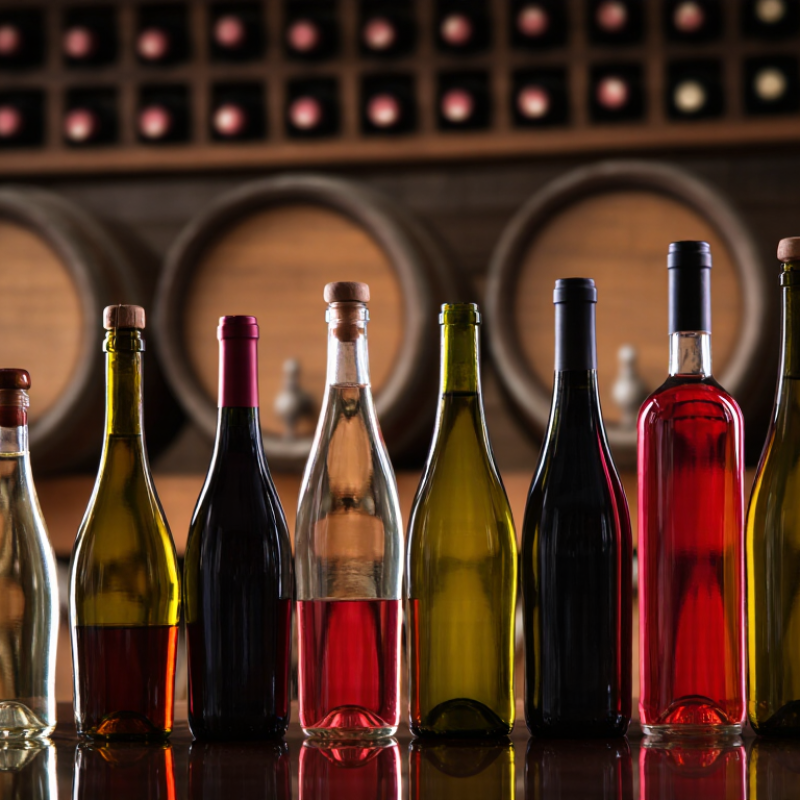
Wine capacity means liquid volume, not the bottle’s height or width. A 750-millilitre bottle holds 0.75 litres; a 1.5-litre magnum holds twice that amount. The distinction matters because two bottles can look similar yet have different internal shapes. The EU’s Directive 2007/45/EC lists permitted nominal wine quantities, including 375, 500, 750 and 1,500 millilitres. These figures describe the declared amount, not the glass capacity up to the rim. Small difference. I still find that easy to misread.
For a practical check, measure the liquid with calibrated volume equipment, or weigh it and account for the wine’s density. OIML’s R 87 recommendation sets out methods for checking the net quantity in prepackages; it focuses on contents, not bottle dimensions. At home, a marked measuring jug can help, but its graduations are less precise than laboratory equipment. The OIV’s State of the World Vine and Wine Sector report estimated 2023 global wine production at 237 million hectolitres. Consistent volume units make figures like that comparable across large production totals, while a bottle label gives the capacity buyers can use directly. Sources: EU Directive 2007/45/EC; OIML R 87; OIV, State of the World Vine and Wine Sector in 2023.
The standard wine bottle holds 750 milliliters, making it the clearest reference point for comparing bottle sizes. It is about 30 centimeters tall, though shape and proportions vary. On a kitchen counter, it looks modest beside a magnum, which holds 1.5 liters, or two standard bottles. A half bottle contains 375 milliliters. A split is smaller still, usually around 187.5 milliliters.
Serving estimates help make these numbers practical. A 750-milliliter bottle yields five 150-milliliter pours, or six smaller ones. Actual pours are rarely so exact. Glass shape, occasion, and the person pouring all matter. I used to think bottle names alone made size comparisons simple. They do not always. Terms for larger formats can differ by region, and some names refer to specific capacities rather than a consistent doubling pattern.
For a quick visual comparison, line up a half bottle, a standard bottle, and a magnum. The standard bottle sits between easy portability and enough volume for several guests. Larger bottles can also age differently because they contain less air relative to the wine, but storage conditions remain important. Check the stated capacity when precision matters. Names can mislead; milliliters cannot.
Ten Common Wine Bottle Sizes and Their Names
Wine bottle sizes are measured by volume, but their names can vary by region and wine style. A piccolo, sometimes called a split, holds 187.5 milliliters—about one glass. A half bottle, or demi, holds 375 milliliters. The familiar standard bottle contains 750 milliliters. These smaller formats are easier to chill and carry, though wine may mature differently in different bottle sizes.
Larger bottles begin with the magnum at 1.5 liters, equal to two standard bottles. A 3-liter bottle is often called a double magnum; in some naming systems, it is a Jeroboam. A Rehoboam holds 4.5 liters, and a Methuselah holds 6 liters. Names are not perfectly consistent. That can be confusing, even for attentive shoppers.
At 9 liters, the bottle is commonly called a Salmanazar. A Balthazar holds 12 liters, while a Nebuchadnezzar holds 15 liters. That is a lot of wine. Large formats can be striking on a table, but they are heavy and need careful handling. Their wider volume may also call for extra planning when serving, since pouring and storage are less convenient than with a standard bottle.
| Bottle Name | Volume | Equivalent to 750 ml Bottles | Approximate 150 ml Servings | Common Use or Naming Note |
|---|---|---|---|---|
| Piccolo (Split) | 187.5 ml | ¼ | 1.25 | A small single-serving format, often used for sparkling wine. |
| Demi (Half Bottle) | 375 ml | ½ | 2.5 | Half the volume of a standard wine bottle. |
| Standard Bottle | 750 ml | 1 | 5 | The most widely used bottle size for wine. |
| Magnum | 1.5 L | 2 | 10 | Equal to two standard bottles. |
| Double Magnum / Jeroboam | 3 L | 4 | 20 | Often called a Double Magnum in Bordeaux; Jeroboam is commonly used for this size in Champagne. |
| Jeroboam / Rehoboam | 4.5 L | 6 | 30 | Jeroboam is used for this size in Bordeaux; Rehoboam is used for this size in Champagne. |
| Imperial / Methuselah | 6 L | 8 | 40 | Imperial is common in Bordeaux; Methuselah is used for this size in Champagne and Burgundy. |
| Salmanazar | 9 L | 12 | 60 | A large-format bottle equal to twelve standard bottles. |
| Balthazar | 12 L | 16 | 80 | A large-format bottle equal to sixteen standard bottles. |
| Nebuchadnezzar | 15 L | 20 | 100 | A very large format equal to twenty standard bottles. |
Bottle names can vary by region and wine style. Serving counts are approximate and based on a 150 ml pour.
Bottle-size names often carry history as well as volume. “Magnum” comes from Latin for “great,” while several names for larger bottles, such as Jeroboam and Methuselah, draw on biblical figures. The naming tradition sounds orderly, but its origins are not always documented clearly. Some explanations are repeated more often than they are proven.
Regional usage can change what a name means. In Champagne, a Jeroboam commonly holds 3 litres; in Bordeaux, the same name may refer to a larger format. Other regional conventions differ too, so a familiar name does not always guarantee a familiar volume. In practice, check the stated capacity before choosing a bottle for a table or cellar. A 1.5-litre magnum, for example, is twice the standard 750-millilitre bottle. The distinction matters when planning pours, storage, or serving space. These naming differences can feel confusing. They are part of the subject, not a tidy system.
Tip: Read the litre measurement on the label, especially when buying an unfamiliar regional format. Names are useful clues, not precise standards everywhere.
Bottle size changes more than the number of glasses on the table. A standard 750 ml bottle gives about five 150 ml pours, though actual servings vary. A half bottle, at 375 ml, suits a small meal and chills quickly. A magnum holds 1.5 litres, or roughly ten such pours. Larger formats can mature more slowly because there is less air exposure relative to the wine. Still, closure quality and storage conditions matter; size alone cannot predict how a bottle will age. Some large-format names also vary by region, so check the stated volume.
Storage can become awkward as bottles grow. A magnum may not fit a standard refrigerator shelf, and a full large-format bottle is heavy to handle. Keep bottles away from heat, light, and sudden temperature changes. Store cork-finished bottles on their sides when appropriate, so the cork stays in contact with wine. Smaller bottles are convenient, but once opened, their remaining wine can be more exposed to air. I sometimes underestimate the space a large bottle needs.
Tips: Measure your shelf before buying a large format. For serving, note the volume and plan pours in advance; a 750 ml bottle will not always provide five full glasses. Re-seal opened wine and keep it cool.
It holds 750 milliliters. That is the clearest size reference.
It makes about five 150-milliliter pours, or six smaller ones. Real pours vary.
A magnum holds 1.5 liters, or twice the standard volume. It looks noticeably larger on a counter.
A half bottle holds 375 milliliters. A split usually holds around 187.5 milliliters.
No. Names can vary by region. Check the stated capacity.
In Champagne, it commonly holds 3 liters. In Bordeaux, the same name may refer to a larger format.
They can, because they contain less air relative to the wine. Storage conditions still matter.
Read the capacity in milliliters or liters. I once trusted the name alone; that was not precise enough.
This guide explains how wine bottle capacity is measured and why the standard bottle provides a useful reference for comparing other sizes. It introduces ten common bottle sizes, describing their approximate capacities and traditional names, from smaller formats to bottles intended for larger gatherings. The phrase Name Of Wine Bottle Sizes can help readers identify the terminology used when comparing these formats.
Bottle names have varied origins, and some differ across regions, so the guide also notes that naming conventions are not always universal. Finally, it explores how bottle size can affect serving portions, handling, and storage. Understanding these differences makes it easier to choose a suitable format for a meal or occasion and to plan how bottles will be stored and shared.

QLT Glass