Top Glass Bottle Glass Stopper Suppliers Worldwide?

Time:2026-09-08 Author:Isabella
0%

Choosing reliable Glass Bottle Glass Stopper suppliers requires more than comparing glossy catalogs or the lowest quoted price. This guide examines manufacturers and distributors serving beverage, cosmetic, laboratory, and specialty packaging markets worldwide. It focuses on practical evidence, including glass clarity, stopper fit, sealing performance, surface finish, production capacity, and quality-control procedures. A well-made stopper should seat smoothly, resist leakage, and complement the bottle without excessive force. Small details matter. A rough rim can damage the seal. An uneven finish can weaken the product’s presentation.

Supplier evaluation also requires direct communication and careful sampling. Ask for material specifications, dimensional tolerances, packaging methods, inspection records, and realistic lead times. Confirm whether the supplier supports custom shapes, colors, logos, and compatible closures. Product samples should be tested under ordinary storage and handling conditions before any large order is approved. That step is often skipped. It should not be. Shipping distance, export experience, documentation, and responsive after-sales service can influence the final cost as much as the unit price. However, no supplier is perfect, and published information may remain incomplete. Buyers should verify important claims independently and record any unresolved concerns. This introduction presents a practical framework for comparing leading Glass Bottle Glass Stopper suppliers, while keeping quality, consistency, compliance, and long-term reliability at the center of the decision.
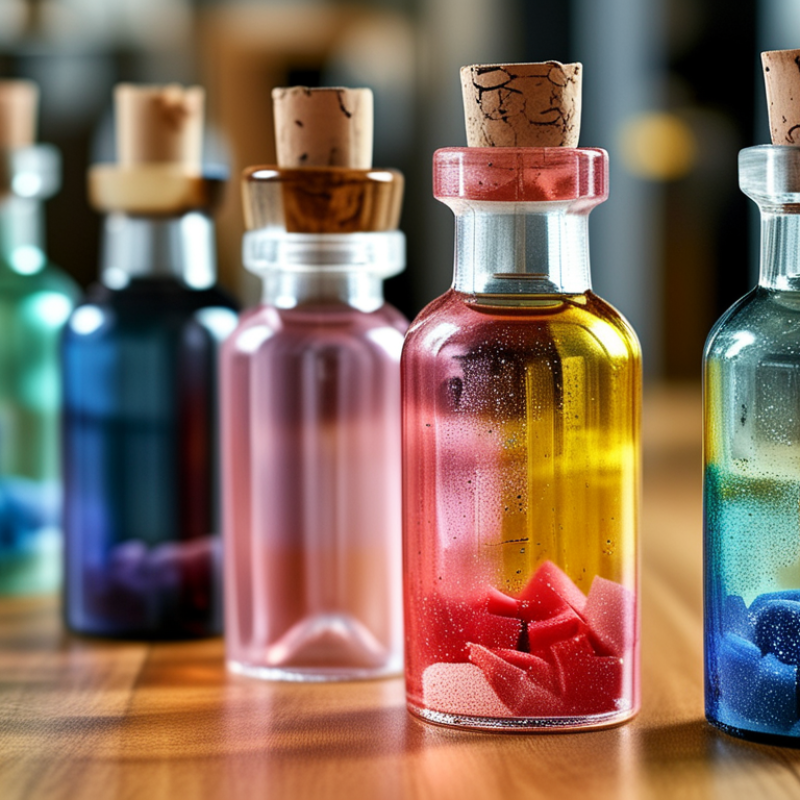
Top Glass Bottle Glass Stopper Suppliers Worldwide?

What Are Glass Bottle Glass Stoppers and Where Are They Used?

Glass bottle glass stoppers are rigid closures shaped to fit a bottle neck. They may use a ground-glass taper, a silicone ring, or a polymer sleeve. The stopper’s job is simple: reduce air exchange, prevent leakage, and protect the liquid from dust. It is not always an airtight seal. Fit matters more than appearance.

These closures are common on decorative beverage bottles, table oil and vinegar bottles, perfume containers, cosmetic packaging, and laboratory sample vessels. A short stopper feels stable in a thick glass neck. A long stopper can improve contact, but it may be harder to remove. Suppliers therefore check neck diameter, taper angle, surface finish, insertion force, and tolerance. A stopper can look perfect and still leak. That is an easy mistake during sourcing.

The wider glass sector supports this demand. Fortune Business Insights estimated the global glass packaging market at USD 78.31 billion in 2024, with projected growth through 2032. Grand View Research also identifies food, beverage, pharmaceutical, and cosmetic packaging as major glass-use segments. These figures do not measure stoppers alone, but they show the expanding market around glass closures. Recyclability is another practical advantage; industry data from the European Container Glass Federation describes glass as repeatedly recyclable without losing its basic quality. Still, mixed materials can complicate recycling. In my experience, a removable sealing ring is often more practical than permanent bonding, though it can reduce the package’s visual simplicity.

What Are Glass Bottle Glass Stoppers and Where Are They Used?

Glass bottle stoppers are reusable closures made from soda-lime or borosilicate glass. They are commonly used for spirits, specialty oils, vinegar, cosmetics, decorative bottles, and selected pharmaceutical containers because glass is non-porous, chemically stable, and resistant to odor transfer.

The chart shows the theoretical linear expansion of soda-lime glass from a reference temperature of 20°C, using a representative coefficient of thermal expansion of 9 × 10⁻⁶/K. This property is important when glass stoppers are exposed to hot filling, sterilization, refrigeration, or rapid temperature changes.

How to Evaluate Glass Stopper Suppliers Worldwide

How to Evaluate Glass Stopper Suppliers Worldwide

Selecting a glass stopper supplier requires more than comparing unit prices. According to Grand View Research’s 2024 Glass Packaging Market report, the global market was valued at approximately USD 82 billion in 2023. This scale creates many options, but quality still varies widely.

Request material specifications, dimensional tolerances, and independent test records.

A reliable supplier should explain glass composition, thermal-shock resistance, surface defects, and closure fit. Ask for samples from different production batches. One perfect sample proves very little.

Check quality systems, production capacity, and inspection procedures. ISO 9001 certification can support consistency, but it does not replace factory verification.

Review reports from Intertek, SGS, or equivalent testing laboratories when available. Also confirm food-contact compliance for your destination markets.

Small details matter.

Measure stopper diameter, neck fit, polishing quality, and sealing performance. Discuss minimum order quantities, mold ownership, packaging protection, and replacement policies. The OECD’s Global Plastics Outlook has increased attention on packaging sustainability, so suppliers should provide recycled-content data or energy information carefully. Glass may be recyclable, but transport weight raises emissions.

Lead time deserves a practical test.

Request a trial order before signing a long contract. A supplier may promise fast delivery, yet struggle during peak seasons. This is easy to overlook.

Score each supplier using documented evidence, not confident presentations. No scorecard is perfect. Human judgment still matters, especially when defects appear only after filling, shipping, or repeated opening.

Which Regions Lead the Global Glass Stopper Supply Market?

Asia-Pacific currently leads the global glass stopper supply market by manufacturing scale. Grand View Research valued the global glass packaging market at about USD 82 billion in 2023, with Asia-Pacific holding roughly 43% of revenue. China and India benefit from large furnaces, expanding pharmaceutical production, and dense packaging networks. However, customs data rarely separates glass stoppers from bottles. That limitation matters.

Europe remains influential in premium and technically precise stopper production. UN Comtrade records under HS 7010 place several European manufacturing economies among major glass-container exporters, although the code includes bottles and other closures. European suppliers often compete through tight dimensional tolerances, polished surfaces, and compatibility testing for spirits, cosmetics, and laboratory packaging. Production is less volume-driven. Quality is the selling point.

North America shows steady demand from beverage, healthcare, and personal-care packaging. Industry reports from Mordor Intelligence identify Asia-Pacific as the fastest-growing pharmaceutical glass packaging region, while Europe retains strong specialist capabilities. Regional rankings can therefore change by product type. A high-volume molded stopper may come from Asia, while a custom-finished component may come from Europe. The comparison is imperfect, but it reflects how supply really works.

What Products and Services Do Leading Suppliers Offer?

Leading glass bottle glass stopper suppliers now offer more than standard closures. Their portfolios often include solid glass stoppers, ground-fit plugs, decorative tops, sealing rings, and custom neck finishes. According to Grand View Research, the global glass packaging market was valued at about USD 78 billion in 2023. This growth increases demand for premium closures with consistent fit and visual quality.

Reliable suppliers usually provide technical support from concept to production. Services may include 3D drawings, mold development, prototype sampling, color matching, surface polishing, printing, and packaging design. Quality teams commonly inspect dimensions, surface defects, sealing performance, and thermal-shock resistance. Smithers’ global glass packaging research highlights lightweighting, premium presentation, and manufacturing efficiency as major industry directions. Some suppliers also provide recycled-glass options and documented material traceability.

The details matter.

For beverage and cosmetic applications, buyers should request food-contact or product-contact documentation where applicable. They should also confirm testing methods, batch records, minimum order quantities, and delivery tolerances. In practice, a stopper can look perfect but fit poorly after temperature changes. That is an easy mistake to underestimate. Industry experience suggests that early sampling reduces costly mold revisions, although sampling alone cannot replace production-line inspection. Some suppliers offer automated vision checks, but manual review still helps identify subtle chips and uneven polishing.

Top Glass Bottle Glass Stopper Suppliers Worldwide? - What Products and Services Do Leading Suppliers Offer?

Supplier Category Typical Bottle Products Glass Stopper Products Common Materials and Finishes Customization Services Quality and Compliance Support Typical Order and Delivery Features
Standard stock packaging suppliers Ready-made bottles for spirits, food products, cosmetics, pharmaceuticals, and laboratory use; common capacities include approximately 30 ml to 1,000 ml. Standard glass stoppers, matching replacement stoppers, and basic stopper-and-bottle sets. Soda-lime glass; clear, amber, green, blue, and other molded colors; ground or polished sealing surfaces. Limited label area, color selection, closure matching, and standard decoration options. Product specifications, dimensional drawings, basic inspection reports, and packaging documentation. Lower minimum order quantities than custom production; stock availability and lead time depend on inventory and destination.
Custom molded bottle manufacturers Custom bottles with proprietary silhouettes, embossed details, thick bases, shoulders, and specialized neck designs. Custom-matched glass stoppers designed for the bottle neck, including shaped and decorative stopper heads. Soda-lime glass for most packaging applications; clear, tinted, frosted, opaque, and translucent finishes. Concept development, CAD files, 3D prototypes, mold engineering, embossing, color development, and surface decoration. Dimensional tolerances, leak testing, visual inspection, material declarations, and production sample approval. Higher tooling investment and production minimums; pilot runs are commonly required before full-scale manufacturing.
Premium spirits and beverage packaging suppliers Decorative liquor, liqueur, wine, syrup, and specialty beverage bottles, often featuring substantial glass weight and distinctive shapes. Decorative glass stoppers with wood, metal, ceramic, or polymer top components, subject to product requirements. Flint, extra-flint, colored, frosted, acid-etched, coated, and polished glass surfaces. Screen printing, labeling, frosting, acid etching, hot stamping, painting, coating, and decorative assembly. Closure compatibility checks, dimensional control, appearance standards, transit testing, and packaging validation. Project-based pricing; production schedules commonly include tooling, decoration, assembly, and export packaging stages.
Pharmaceutical and laboratory packaging suppliers Small-volume bottles, reagent bottles, sample bottles, dropper bottles, and containers for light-sensitive or chemically sensitive contents. Ground-glass stoppers, precision-fit closures, and compatible stopper components for controlled storage. Type III soda-lime glass for general use; borosilicate glass where higher thermal or chemical resistance is required; clear or amber colors. Graduations, identification marks, controlled neck dimensions, sterile or clean packaging options, and custom labeling. Material certificates, dimensional inspection, extractables-related documentation when applicable, cleanliness controls, and traceability records. More stringent specifications, batch traceability, controlled packing, and longer qualification timelines than general packaging.
Cosmetic and personal-care packaging suppliers Perfume bottles, facial-serum bottles, cosmetic jars, wellness product bottles, and refillable presentation containers. Decorative glass stoppers, stopper caps, insert-fit closures, and coordinated bottle-and-closure assemblies. Clear, frosted, tinted, coated, and thick-wall glass; stopper heads may use glass, wood, metal, or polymer materials. Color matching, frosting, metallization, printing, engraving, coating, assembly, and gift-set development. Appearance standards, closure fit checks, cosmetic inspection, packaging drop tests, and material declarations. Prototype approval is commonly followed by decorated samples, assembly trials, and scheduled mass production.
Sustainable and recycled-glass packaging suppliers Reusable bottles, refill-oriented containers, lightweight bottles, and packaging made with a declared proportion of recycled glass. Reusable glass stoppers and repair or replacement stopper programs where the bottle design supports repeated use. Recycled-content soda-lime glass; natural color variation may occur, especially in amber, green, or mixed-color batches. Weight reduction, recycled-content targets, refill-system design, simplified decoration, and recyclable component selection. Recycled-content declarations, environmental data, packaging composition information, and design-for-recycling guidance. Availability can vary by furnace campaign and color; sustainability claims should be verified with supplier documentation.
Integrated packaging and fulfillment providers Bottles supplied with compatible stoppers, labels, cartons, inserts, and presentation packaging for finished product programs. Standard or custom glass stoppers, assembled closures, protective sleeves, and replacement components. Glass selected according to product, appearance, durability, and filling requirements; multiple stopper materials may be coordinated. Sourcing, artwork coordination, decoration, kitting, assembly, labeling, inventory management, and export packing. Incoming inspection, assembly checks, barcode or label verification, packing specifications, and shipment documentation. Single-project coordination can reduce vendor management; costs and lead times depend on the number of integrated services.

Note: Product availability, minimum order quantities, certifications, tooling requirements, and delivery schedules vary by specification, destination, production capacity, and applicable regulations.

How Can Buyers Select a Reliable Glass Stopper Supplier?

Top Glass Bottle Glass Stopper Suppliers Worldwide?

How Can Buyers Select a Reliable Glass Stopper Supplier?

Reliable sourcing begins with measurable evidence, not attractive samples. The 2024 Global Glass Packaging Market report estimates the sector exceeded USD 75 billion in 2023. This scale brings many suppliers, but capacity does not guarantee precision. Buyers should request dimensional inspection records, glass composition details, surface-finish standards, and batch traceability. A stopper must fit the bottle neck consistently. Even a tiny mismatch can cause leakage, wobbling, or difficult removal.

The ISO Survey 2023 recorded more than 1.2 million ISO 9001 certificates worldwide. Certification is useful, but it is not proof of every product’s quality. Ask whether the factory’s certificate covers glass forming, grinding, inspection, and packing. Review recent test reports for thermal shock, chemical resistance, visual defects, and closure fit. A credible supplier should explain its sampling plan and corrective-action process. Vague answers are warning signs. In practice, buyers sometimes trust one perfect sample too quickly.

Tips: Compare three production batches, not one. Measure stopper diameter, height, weight, and contact points independently. Request pilot quantities before a full order. Check packaging carefully; chipped edges often appear during transport, not manufacturing. Confirm lead times, minimum order quantities, replacement terms, and export documents in writing. Supplier audits also matter. A clean showroom can still hide weak process control.

FAQS

: How should I compare glass stopper suppliers?

: Compare material data, dimensions, testing records, production capacity, and delivery performance. Price is only one piece. A low quote may hide weak inspection or poor packaging protection.

What technical information should I request?

Ask for glass composition, dimensional tolerances, thermal-shock resistance, and surface-defect limits. Request details about neck fit, polishing, and sealing performance. Clear measurements prevent vague promises.

Why should I request samples from several batches?

One attractive sample proves very little. Ask for samples from different production batches and inspect each stopper carefully. Look for chips, uneven polishing, cracks, and inconsistent diameters.

Which regions are important for glass stopper sourcing?

Asia-Pacific offers large manufacturing capacity and broad packaging networks. European suppliers often focus on precise dimensions and premium finishing. North America serves beverage, healthcare, and personal-care demand. Regional rankings can change by product type.

What services may a capable supplier provide?

Services may include technical drawings, mold development, prototypes, color matching, polishing, and packaging design. Some suppliers also offer traceability and recycled-glass options. Confirm which services are included in the quoted price.

How can I check stopper quality?

Measure diameter, neck fit, surface condition, sealing performance, and resistance to temperature changes. Review inspection procedures and independent laboratory reports when available. Automated inspection helps, but manual review still catches subtle defects.

What should I confirm before placing a large order?

Confirm minimum order quantities, mold ownership, replacement policies, packaging methods, and acceptable defect rates. Request a trial order before signing a long-term agreement. Promises can weaken during peak seasons.

How should sustainability affect supplier evaluation?

Ask for recycled-content data, energy information, and transport details. Glass can be recycled, but its weight increases shipping emissions. The environmental picture is not perfectly simple. Useful data is better than broad claims.

Is certification enough to prove supplier reliability?

No. A quality certification supports consistency but does not replace factory verification. Review batch records, inspection reports, and actual production samples. A polished presentation can still conceal recurring defects.

Can early sampling prevent all purchasing problems?

No. Sampling may reduce mold revisions and fit-related mistakes. However, defects can appear after filling, shipping, or repeated opening. Production-line inspection remains necessary. Some judgment is unavoidable.

Conclusion

Glass Bottle Glass Stopper products are precision-made closures used to seal bottles for beverages, food, fragrances, pharmaceuticals, cosmetics, and specialty liquids. They help protect contents from dust, leakage, and unwanted air exposure while also adding a refined appearance. Suppliers worldwide may offer standard and customized stopper designs in different shapes, sizes, colors, finishes, and levels of transparency to match various bottle styles and packaging requirements.

When evaluating suppliers, buyers should consider material quality, dimensional accuracy, production capacity, quality-control procedures, customization support, packaging, lead times, and international shipping experience. Major supply regions often distinguish themselves through advanced glass-processing capabilities, efficient manufacturing systems, and strong export networks. Reliable suppliers typically provide product development assistance, samples, surface finishing, technical communication, and consistent after-sales support. Buyers can make a confident choice by comparing specifications, verifying production capabilities, requesting samples, reviewing quality documentation, and confirming that the supplier can deliver stable quality and dependable service over the long term.


Isabella

Isabella

Isabella is a dedicated marketing professional with a sharp focus on driving brand growth and engagement through strategic content creation. With an extensive background in digital marketing, she combines her passion for storytelling with her keen understanding of industry trends to deliver......