A bottle is often the first part of a spirits brand customers can see and touch. Its silhouette, glass clarity, label, and closure can signal whether the product feels modern, traditional, or made for gifting. A well-designed Fancy Liquor Bottle can help a brand stand out on a crowded shelf, but appearance alone cannot earn lasting trust. The bottle must also protect the product and feel comfortable to hold and pour.
Packaging choices matter to consumers, though the evidence needs context. McKinsey’s 2023 consumer survey found that 60% of respondents said they would pay more for products with sustainable packaging. That result covers consumers broadly, not liquor buyers specifically, and stated willingness is not the same as a confirmed purchase. Still, it gives brands a reason to consider material use, recyclability, and the full packaging experience alongside visual appeal.
Small details can carry real weight. A heavy base may feel substantial in the hand, while a clear label can make product information easier to find. Yet heavier glass also uses more material, and a striking shape may be harder to store or recycle. There is no perfect design. Brands should test prototypes with buyers, check practical production requirements, and judge the bottle as part of the whole experience—not as decoration alone. Details matter. The strongest choice balances recognition, usability, and responsible design.
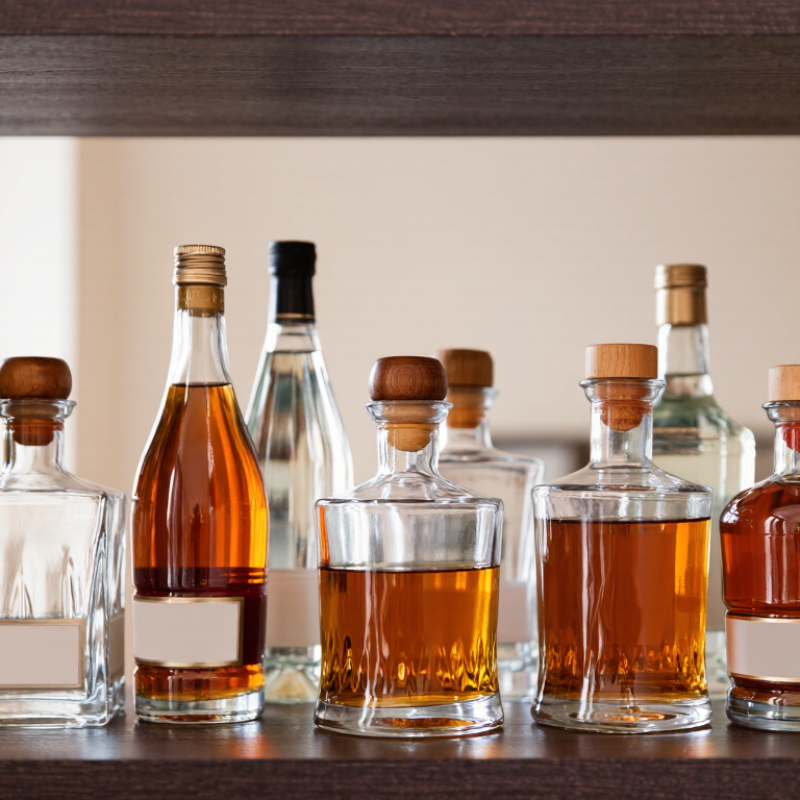
What Defines a Fancy Liquor Bottle: Shape, Glass, Closures, and Finishes?
A fancy liquor bottle is defined by more than decoration. Its shape sets the first impression and affects how it feels in the hand. Broad shoulders can suggest substance, while a tall, narrow profile may look refined on a shelf. Check that the bottle sits steadily and pours without awkward tilting. Small details matter. A dramatic silhouette is less useful if it is difficult to grip or store.
Glass quality shapes both appearance and everyday use. Clear glass shows the liquid’s color, while a subtle tint can soften the light. Look for consistent walls, a clean base, and no visible bubbles or rough seams. Heavier glass may feel premium, but it also adds shipping weight. More weight is not always better. The closure should fit securely and open smoothly; a poor seal can undermine an otherwise polished design. Cork, screw, and synthetic options each create a different tactile impression, so test them with the intended bottle.
Finishes bring the elements together. Frosting, embossing, and restrained color can add texture without crowding the label. Ask how each finish looks under warm retail lighting, not only in a sample room. Fancy can become fussy. In practice, the strongest choice balances shelf presence, reliable handling, and production consistency. That balance takes testing, and one detail may still feel less distinctive than expected.
How Distinctive Bottle Design Builds Brand Recognition on the Shelf
Why Choose Fancy Liquor Bottles for Your Brand?
How Distinctive Bottle Design Builds Brand Recognition on the Shelf
On a crowded shelf, a distinctive liquor bottle can earn a second look before shoppers read its label. Its silhouette, glass weight, closure, and color create quick visual cues. A tall neck or softly squared shoulders can make a bottle recognizable from several feet away. These details work best when they suit the spirit’s character, not just a luxury aesthetic. Small differences matter.
A 2018 Ipsos survey commissioned by the Paper and Packaging Board found that 72% of Americans said packaging design could influence a purchase decision.
WestRock’s 2016 Packaging Matters study reported that 66% of surveyed consumers had tried a new product because its packaging caught their eye. These findings point to packaging’s role in attracting attention, not a guarantee of sales. Context matters.
For liquor, recognition grows when bottle shape, label placement, and color remain consistent across a product line. A distinctive shoulder or embossed detail can help shoppers spot the bottle again. Yet design should also work under real retail lighting, beside competing shapes and colors. A glossy finish may photograph beautifully but disappear under warm lights; that is easy to overlook. Test physical samples on a shelf, not only on a screen.
How Weight and Decoration Affect Production, Handling, and Cost
Fancy liquor bottles can make a strong first impression, but their weight and decoration affect more than appearance. A thick glass base may feel substantial in the hand. It also uses more glass and can slow forming, cooling, and inspection. Heavy bottles need careful testing on filling lines, especially where conveyors or grippers are adjusted for standard formats. Small dimensional changes matter. A sample can look right and still sit awkwardly in a carton.
Decoration adds its own production steps. Screen printing, metallic finishes, and raised details may require extra setup, curing time, or inspection. Some finishes show scratches or fingerprints more clearly under store lighting. More weight also increases shipping and handling demands, from case design to pallet loading. The added cost is not always obvious in a single-unit quote. It can appear later in transport, breakage, or slower packing. A premium feel is useful, but not at any price.
Tips: Request decorated samples, then test them on the actual line. Check grip with wet hands and confirm case fit. Compare total landed cost, not just bottle cost. One detail may need rethinking.
What EPA’s 2018 Data Show About U.S. Glass Container Recycling: 31.3%
Why Choose Fancy Liquor Bottles for Your Brand?
What EPA’s 2018 Data Show About U.S. Glass Container Recycling: 31.3%
Fancy liquor bottles do more than hold a product. They shape how it feels in the hand and looks on a shelf. A thick base, clear glass, and a well-fitted closure can signal care without extra explanation. But visual appeal is only part of a responsible packaging choice. Glass has trade-offs. The U.S. EPA reported a 31.3% recycling rate for glass containers in 2018. That figure is useful context, not a promise that any bottle will be recycled. Collection access, sorting systems, and local handling affect what happens after use.
Design can help, but it cannot fix those gaps alone. A bottle that is easy to empty and separate is more practical than one with decorative parts that are hard to remove. Choose shapes that protect the contents and stack efficiently during shipping. A heavier bottle may feel premium, yet it uses more material and adds transport weight. That tension deserves review. The 31.3% figure is not proof of perfect circularity; it is a reminder that recovery remains incomplete. Ask suppliers for bottle weight, recycled-content details, and closure materials. Then check how the finished package sorts in the markets you serve.
How FEVE’s 2021 EU Recycling Rate of 80.1% Shapes Bottle Design Choices
Why Choose Fancy Liquor Bottles for Your Brand?
How FEVE’s 2021 EU Recycling Rate of 80.1% Shapes Bottle Design Choices
A premium bottle can signal quality before it is opened. Yet weight, coatings, and decorative parts affect its next life. FEVE reported that 80.1% of glass packaging was recycled in the EU in 2021. That figure reflects a strong collection system, not a guarantee that every bottle is easily recycled. Eurostat also reported 188.7 kilograms of packaging waste per EU resident that year. Design decisions therefore matter beyond the shelf.
Choose clear, amber, or green glass that local sorting systems can identify. Keep labels small, and use adhesives that release during washing. Avoid full-body sleeves, metallic finishes, and attached components that complicate separation. A deep emboss can look refined, but extra glass adds weight during transport. A lighter bottle may feel less substantial in the hand. That trade-off deserves a real test, not an assumption. Small details matter.
Before finalizing a mold, ask a glass supplier about recycled-content availability and local collection conditions. FEVE’s recycling data supports glass as a widely recovered packaging material, but recovery rates vary by region. A decorative stopper or elaborate label may still be worthwhile; just check whether it separates cleanly. Request a prototype, then inspect how it pours, feels, and sorts. The most convincing design is not always the most ornate one.
Why Choose Fancy Liquor Bottles for Your Brand? - How FEVE’s 2021 EU Recycling Rate of 80.1% Shapes Bottle Design Choices
| Design dimension |
Verified fact or context |
Practical bottle-design choice |
| Glass packaging recycling |
The reported EU glass packaging recycling rate was 80.1% in 2021. |
Treat recyclability as a core design requirement: favor a bottle that fits established glass collection and recycling systems. |
| Glass recyclability |
Glass can be recycled repeatedly without an inherent loss of material quality, although actual recycling depends on collection and processing. |
Choose a bottle design intended for recovery as glass, rather than relying on decorative features that make separation or sorting more difficult. |
| Color selection |
Glass is commonly sorted by color, with clear, green, and amber glass handled as distinct color streams in many recycling systems. |
Select a color with both the intended shelf appearance and the local recycling stream in mind; avoid unusual mixed-color effects when recyclability is a priority. |
| Decoration and labels |
Labels, inks, coatings, and other attached materials can affect sorting and processing; compatibility varies by material and facility. |
Use decoration selectively and check label, adhesive, coating, and ink compatibility with the target recycling market. |
| Closures and components |
A bottle may include non-glass components such as caps, pumps, sleeves, or ornamental fittings, which may need separate handling. |
Keep components easy to identify and separate where appropriate, and provide clear disposal guidance for consumers. |
| Weight and logistics |
Heavier packaging requires more material and adds transport weight; the environmental effect depends on the full product life cycle and distribution route. |
Balance a premium feel with material efficiency, and assess bottle weight alongside strength, breakage risk, and shipping requirements. |
| Premium appearance |
A distinctive silhouette or finish can support product presentation, but appearance alone does not establish environmental performance. |
Create visual distinction through shape and restrained detailing while keeping the bottle practical to manufacture, ship, use, and recycle. |
Note: The 80.1% figure refers to the reported EU glass packaging recycling rate for 2021. Recycling outcomes and sorting requirements can vary by country and facility.
Conclusion
A Fancy Liquor Bottle is defined by more than its shape. The glass color and thickness, closure, and decorative finish all contribute to its appearance and feel. A distinctive design can help a product stand out on a shelf and make its packaging easier for customers to recognize. At the same time, choices such as heavier glass or elaborate decoration can affect manufacturing costs, shipping, storage, and day-to-day handling.
Sustainability is another consideration in bottle design. The article notes that the U.S. Environmental Protection Agency reported a 31.3% recycling rate for glass containers in 2018, while FEVE reported an 80.1% EU glass packaging recycling rate for 2021. These figures offer useful context when weighing material and decoration choices. Thoughtful bottle design can balance visual appeal, practical production needs, and recyclability.

 QLT Glass