Engineered for Durability and Aesthetics
Understanding the critical role of glass thickness in brand positioning and product safety.
In the contemporary wine and spirits market, the glass thickness of a wine bottle is no longer just a structural necessity; it is a vital indicator of brand value and premiumization. Globally, the demand for varied glass thicknesses is driven by two competing forces: the luxury market's desire for heavy-base "extra flint" bottles and the mass market's push for lightweight, eco-friendly containers.
Standard wine bottles typically maintain a wall thickness between 3mm and 5mm. However, for sparkling wines—where internal pressures can reach up to 6-9 bars—thickness and glass distribution uniformity are paramount to prevent catastrophic failure during transport or storage. As a leading China glass bottle manufacturer, we utilize advanced FEA (Finite Element Analysis) to simulate stress points, ensuring our bottles exceed international safety standards.
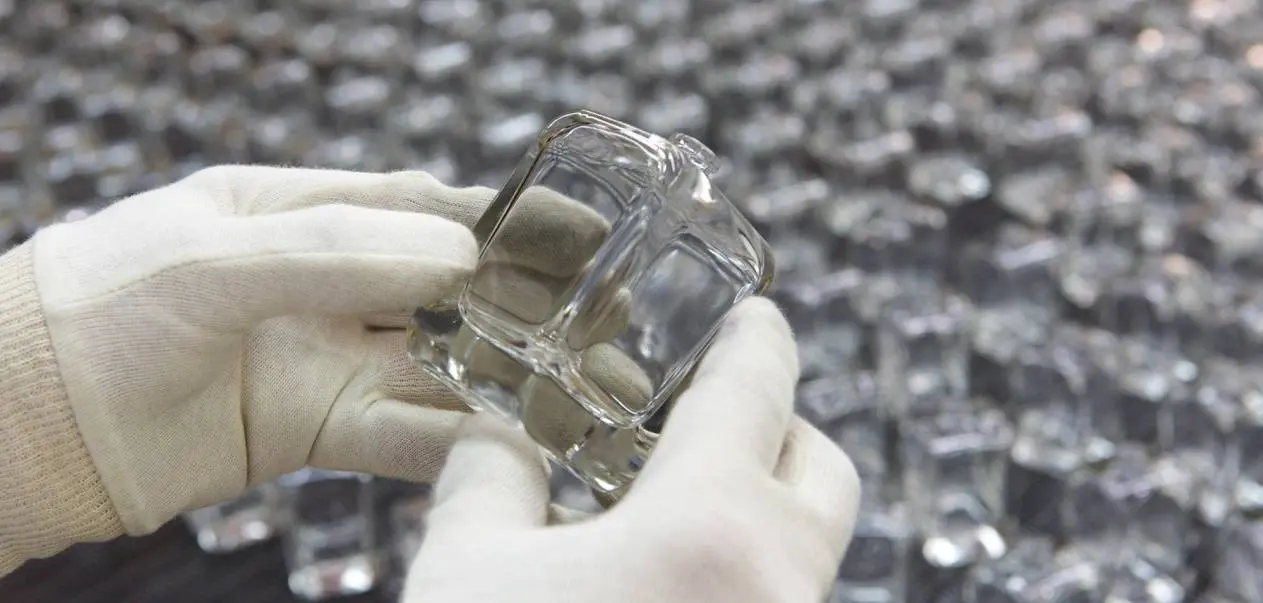
The synergy of raw material proximity, automated kilns, and expert craftsmanship.
Our China-based facility uses AI-controlled batching systems to ensure the chemical composition of silica, soda ash, and limestone is perfectly balanced for maximum clarity and thermal shock resistance.
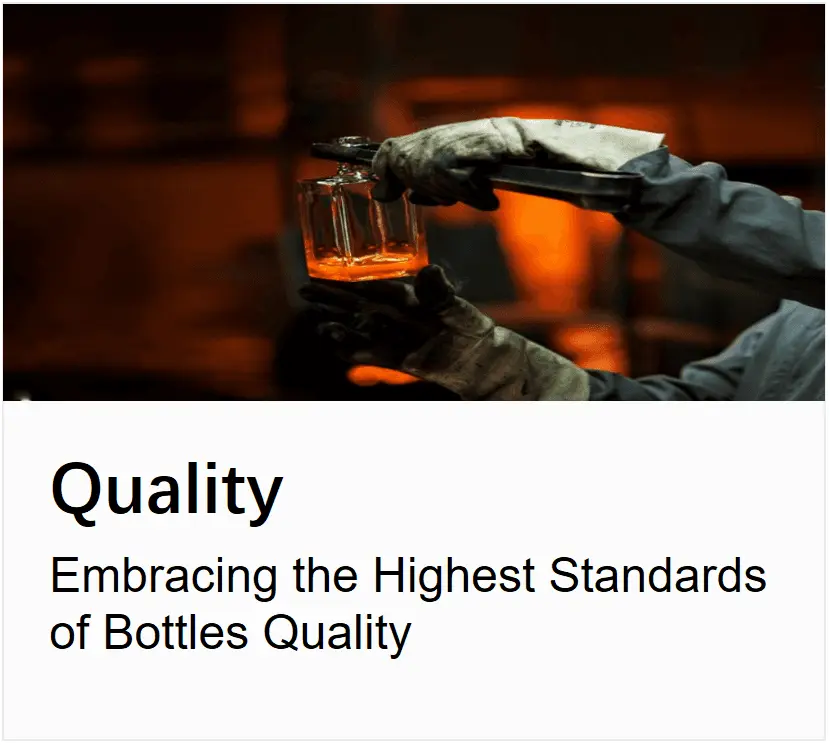
Thickness means nothing without proper stress relief. Our 100-meter annealing lehrs gradually cool the glass to eliminate internal tension, a process critical for high-thickness heavy-base designs.
Operating high-capacity furnaces 24/7 allows us to offer premium glass thickness at a fraction of the cost of European competitors, without compromising on E-E-A-T quality standards.
We incorporate up to 40% cullet (recycled glass) in our green and amber lines, reducing energy consumption by 15% while maintaining rigorous wall thickness consistency.
Our in-house mold shop can develop complex geometries where glass is strategically thickened at the shoulder and base for enhanced "hand-feel" and impact protection.
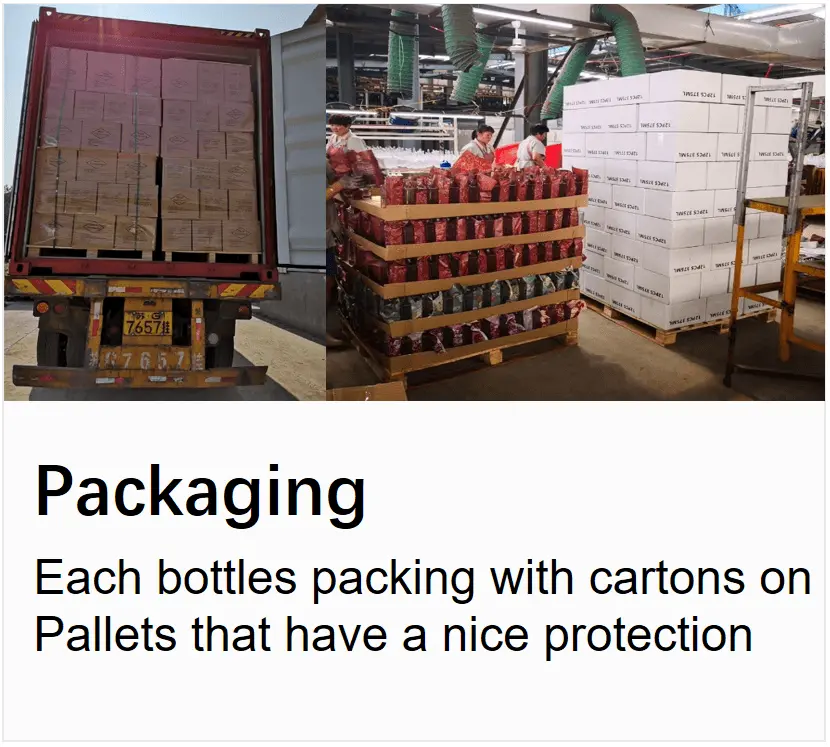
Located near major ports, we ensure that the added weight of thick-walled glass bottles is offset by optimized shipping routes and protective packaging to minimize breakage.

Our premier custom bottle manufacturing service, with an optimized supply chain, seamlessly transforms your concepts into stunning packaging solutions.

Crafting solutions within our state-of-the-art facility enables us to drive down costs while ensuring swift delivery of top-notch finished goods.

Avail yourself of our complimentary samples, aiding you in solidifying your decision to invest in our premium glass bottle selections.
Information Gain: Why "Total Weight" is a misleading metric for glass quality.
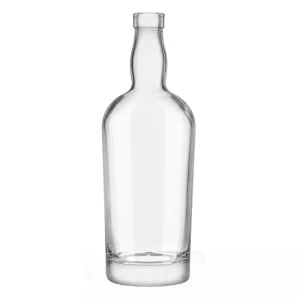
Many premium spirits brands request a deep punt and a thick base. However, the technical challenge lies in the transition zone between the base and the sidewall. If the glass thickness changes too abruptly, it creates a "stress ring" that can lead to spontaneous breakage. Our factory uses automatic IS (Individual Section) machines equipped with infrared sensors to monitor glass distribution in real-time, ensuring that even our heaviest bottles (900g+ for 750ml) maintain perfect structural integrity.
Merging luxury with environmental responsibility.
Global corporations like Diageo and Pernod Ricard are pushing for "Lightweight Glass" initiatives. The challenge for suppliers is reducing glass thickness by 15-20% without losing strength. We achieve this through NNPB (Narrow Neck Press and Blow) technology, which allows for thinner walls with superior strength-to-weight ratios.
As gin and tequila brands continue to premiumize, the demand for "Crystal Clear" glass thickness has spiked. By reducing iron content in our batch and increasing wall thickness at the base, we create a magnifying effect that enhances the visual purity of the liquid inside.
Answering the most common technical questions from global procurement teams.
A: We utilize automated "wall thickness gauges" at the cold end of the production line. Every bottle passes through a laser sensor that measures thickness at 5 different points. Any bottle falling outside the +/- 0.3mm tolerance is automatically rejected and recycled into the furnace.
A: Indirectly, yes. Thicker glass provides a better thermal buffer, slowing down temperature fluctuations that can degrade wine quality. More importantly, UV-protective tints (like Antique Green or Amber) are more effective when applied to thicker glass walls.
A: Thicker bottles are heavier, which increases freight costs. However, we work with clients to optimize palletization. Often, the reduction in breakage-related losses with "heavy-duty" bottles offsets the additional shipping costs for premium products.
A: Absolutely. In fact, thicker glass provides a better "canvas" for deep embossing, allowing for more intricate logos and textures without compromising the bottle's structural integrity.
A: For existing molds with standard thickness, the MOQ is usually one 20ft container. For custom molds requiring specific thickness distributions, the MOQ starts at 30,000 to 50,000 units depending on the complexity.
Swift delivery of premium glass packaging for global brands.

 QLT Glass